
CLASS 006 W/MBAKO MOEMISE: LOST IN TRANSLATION — AN INTERACTIVE STUDY OF LANGUAGE AND SONIC EXPERIMENT
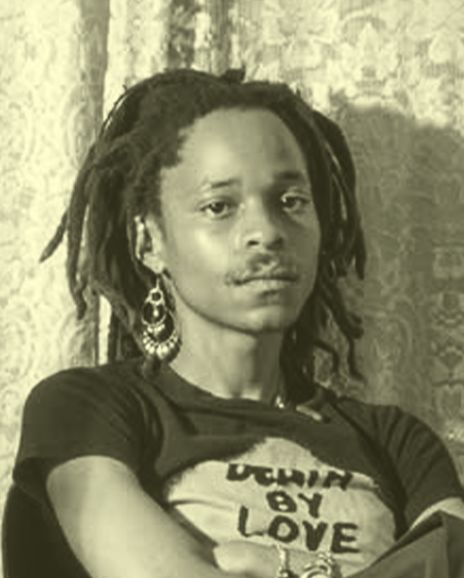
Mbako Moemise is a curator, based in Johannesburg, with an immediate concern with the archival properties of sonic art and psycho-geography. Their visual cultural and curatorial research explores African methodologies of archiving through sound and spatial inquiries. They engage with the concepts of memory, place, sensory experience and temporal positionalities, to question archival systems and amplify alternative African narratives.
IN A BROKEN TELEPHONE FORMAT, A SINGLE PHRASE Was PASSed FROM PARTICIPANT TO PARTICIPANT, EACH TRANSLATING IT INTO THEIR LANGUAGE OF CHOICE.
AS MEANING SHIFTS AND MUTATES, THE PROCESS WILL BE RECORDED AND TRANSFORMED INTO A FINAL SOUND COLLAGE - A LIVING ARCHIVE OF VOICES, INTERPRETATIONS, AND ACCIDENTS ALONG THE WAY.
This isn’t much of a class but rather a collaborative manifesto, an evangelistic inquiry that explores sound art, afro-futuristic approaches to archiving in African contexts and Site-Specificity. The experimental class uses interactivity to engage with the subject matter presented.
1. SOUND ART AND THE EPHEMERAL EXPERIENCE
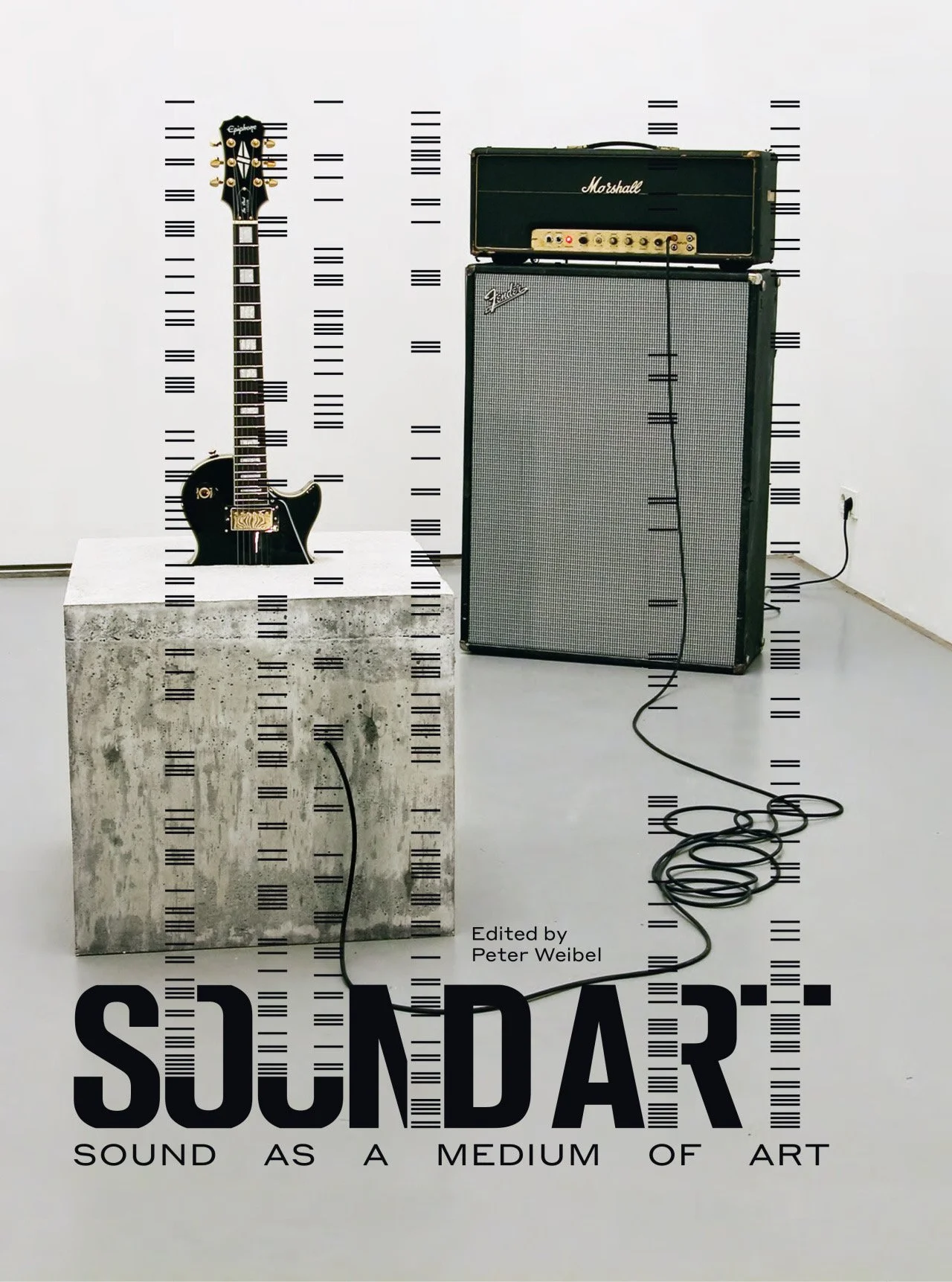
Sound art dates back to the early inventions of futurist Luigi Russolo who, between 1913 and 1930, built noise machines that replicated the clatter of the industrial age and the boom of warfare. Dada and surrealist artists also experimented art that uses sound.
Environmental historian Peter A. Coates pointed out that what we think of as noise is as much a matter of ideology as it is of decibels. Sound Art explores sound and music outside of its aesthetic dispositions. This furthers Russolo’s thinking, expanding on notions of sensory experiences within art that divulge a plethora of subject matter beyond the canvas.
Sound art, by its very nature, is often ephemeral, existing only in the moment it's created or experienced. This transient quality is a core aspect of the art form, differentiating it from more tangible mediums. The focus on the temporal experience, rather than a lasting physical object, is a key characteristic of sound art.
“In their discussion, Bijsterveld and Pinch address how curators can use sound to facilitate interpretation, evoke memories, and construct immersive experiences that transcend the visual plane. Similarly, Jonathan Sterne (2012) proposed that sound in museums conveys information and shapes the affective atmosphere, influencing how visitors connect with the artefacts and the narratives they represent.
From this perspective, Suzanne MacLeod (2013) also proposed that designed soundscapes augment the narrative coherence of exhibitions, thus integrating the sound into the narrative as a textual cohesive device linking, highlighting, correlating, or separating through perception. From this perspective, sound is a narrative instrument and a spatial component that influences the visitor’s exhibition experience. Sound also serves as a guiding tool, drawing visitors’ attention and influencing how they interpret the material on display.”
Numerous artists lean onto sound art as an avenue to explore.
Artists such as Lawrence Abu Hamdan work looks into the political effects of listening, using various kinds of audio to explore its effects on human rights and law.
Lawrence Abu Hamdan is an artist and audio investigator, whose work explores ‘the politics of listening’ and the role of sound and voice within the law and human rights. He creates audiovisual installations, lecture performances, audio archives, photography and text, translating in-depth research and investigative work into affective, spatial experiences. Abu Hamdan works with human rights organisations, such as Amnesty International and Defense for Children International, and with international prosecutors to help obtain aural testimonies for legal and historical investigations. He received his PhD in 2017 from Goldsmiths London and is a practitioner affiliated with Forensic Architecture.
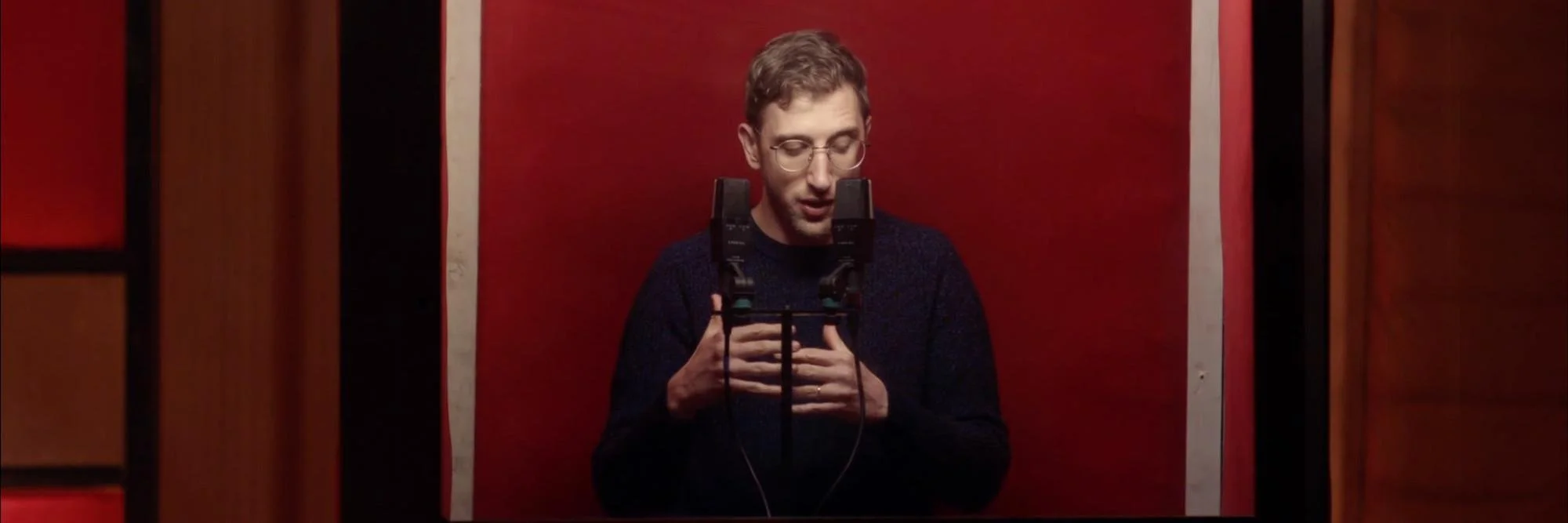
https://ubu.com/film/hamdan_walled.html
03:24 - 05:30
WALL, UNWALLED (2018)
In the year 2000 there was a total of fifteen fortified border walls and fences between sovereign nations. Today, physical barriers at sixty-three borders divide nations across four continents. As these walls were being constructed, millions and millions of invisible cosmic particles called muons descended into the earths atmosphere and penetrated metres deep, through layers of concrete, soil and rock. Scientists realised that these deep penetrating particles could be harvested, and a technology could be developed to use their peculiar physical capacities to pass through surfaces previously impervious to x rays. Muons allowed us to see for the first time the contraband hidden in lead lined shipping containers and secret chambers buried inside the stone walls of the pyramids. Now no wall on earth is impermeable. Today, we're all wall, and no wall at all.
Walled Unwalled is a single channel 20 minute performance-video installation. The performance comprises of an interlinking series of narratives derived from legal cases that revolved around evidence that was heard or experienced through walls. It consists of a series of performances reenactments and a monologue staged inside a trio of sound effects studios in the Funkhaus, East Berlin.

2. AU/ORALITY, ARCHIVES, AFRO-FUTURISM
DEFINITIONS:
AURALITY: Aurality in sound art refers to the emphasis on listening and auditory perception as a central element in artistic creation and experience. It explores the ways sound shapes our understanding of the world and ourselves, often challenging traditional visual-centric approaches to art. Sound art, as a field, prioritizes the aural experience, using sound as its primary medium and material.
ORATURE: Orature refers to the body of literature and cultural expression that is primarily transmitted through spoken or performed means, rather than being written down.
ARCHIVES: A collection of historical documents or records providing information about a place, institution, or group of people.
AFRO-FUTURISM: Afrofuturism is a cultural movement, philosophical perspective, and artistic genre that explores the intersection of African diaspora culture with science and technology, often within the context of science fiction, fantasy, and speculative fiction.
Aurality, simply, means the quality of hearing. Here in we focus on recent theorizations of aurality that hone into the immediate and mediated practices of listening that construct perceptions of nature, bodies, voices, and technologies.
Sound is political.
Andrei van Wyk laments in his conversation with Lindi Mngxitama that, “Within my research, ‘noise’, ‘rhythm’ and ‘sound’ are all incredibly politicised and within the study of H/history, they signify the racialised and gendered divisions of labour within the social conditions that we currently live in. The research focuses greatly on how these social relations occur and operate within the greater societal ‘soundscape’, with a particular focus on South Africa.”
Kim Karabo Makin also makes mention of this when speaking about her work, “On Gaborone, 1985.” A sound installation that imagines Gaborone in 1985 through a mix and sampling of 'the living archive'. 1985 is described as the year that the Botswana capital “lost it's innocence”, due to a number of violent raids by the South African Defence Force. Significantly, the raid on 14 June 1985, led to the demise of Medu Art Ensemble overnight. Makin argues that this may be considered a critical turning point in Botswana’s (art) history, resulting in the stunting of Botswana’s creative development.
https://listeningmap.de/tlm-frontend/#927
“On Gaborone, 1985” (2021)
0:00 - 01:05
3. AFRO-FUTURISM & ARCHIVES
In “Decolonising the Mind”, by Ngugi wa Thiongo, Ngugi writes fervently of the crisis of African languages in literature. Ngugi reflects on his own experience dealing with a language, culture, and surveillance from colonial rule and schooling. He remarks, “The bullet was the means of physical subjugation. Language was the means of spiritual subjugation.” (p. 9)
Orature in Motswana culture is still heavily prevalent. Oral traditions of story telling and the medium/language that archives use to transverse generations offers a dynamic means of archiving.
This is not an approach to decolonise but rather as an assertion of Afro-futurist methodology to listening, archiving and embodying within an African Context.
Could we create archives going forward that are affective and caring in the conservation of culture and Language?
Thero Makepe, a Motswana born multimedia artist, when speaking about his photobook, “We didn’t choose to be born here,” discusses a gap in “knowing.” Makepe, currently focused on photography, employs the moving image as an aesthetic vehicle through which he examines familial, social and geopolitical histories. Within this framework, Makepe engages historic events to explore the liminal spaces between collective and personal memory, foregrounded by his own lyrical and spiritual sensibilities.

Foam Talent 2024-2025 Installation, Foam Museum, Amsterdam (image courtesy of the artist)
Some words are lost to history. How can we preserve an audible history?
4. SOUND ART AS MEDIATION
This experiment can not be approached without first considering The Social Life of Things, by Arjun Appadurai.
Just as commodities circulate, accumulate value, and undergo transformations depending on their cultural and social context, so too does language. It can be commodified, sold, and used as a gateway to power, prestige, or access, particularly in postcolonial settings where languages like English or French became tied to upward mobility.
Secondly, I’d like to discuss the mammoth of a curator Okwui Enwezor’s Johannesburg Biennale in 1977, heralding the theme: “Trade Routes: History and Geography.” Okwui says when reflecting on this biennale in Trade Routes Revisited, published by Stevenson Gallery, “I wanted to make an exhibition that took globalisation as a point of departure, to argue that globalisation started here, in South Africa.”
This point does not only ring as a Historical and Geographical inquiry, but an observation of South Africa herself in 1997.
5. INTERACTIVITY: BROKEN TELEPHONE Translation experiment.
A phrase was prompted by the curator. The phrase was then whispered from one person to another. As the phrase traveled, each person had the option to translate the phrase into a language of their choosing. Once the phrase reached the last person, they then recited the phrase whispered to them aloud.
In this case the phrase was translated and distorted so astray from it’s origin which demonstrated the core of the theory in which translation in archival is a DESTRUCTIVE force, morphing history as the integrity of it’s source is DESTROYED.